People assume I always know what to do next. That I have some master plan or that I can see five steps ahead.
The truth is, I rarely know what’s next. I just keep moving. And somehow, the path keeps revealing itself.
That instinct was built in the field, not the classroom. It came from years of playing, testing, and adapting.
Learning to Build Without a Map
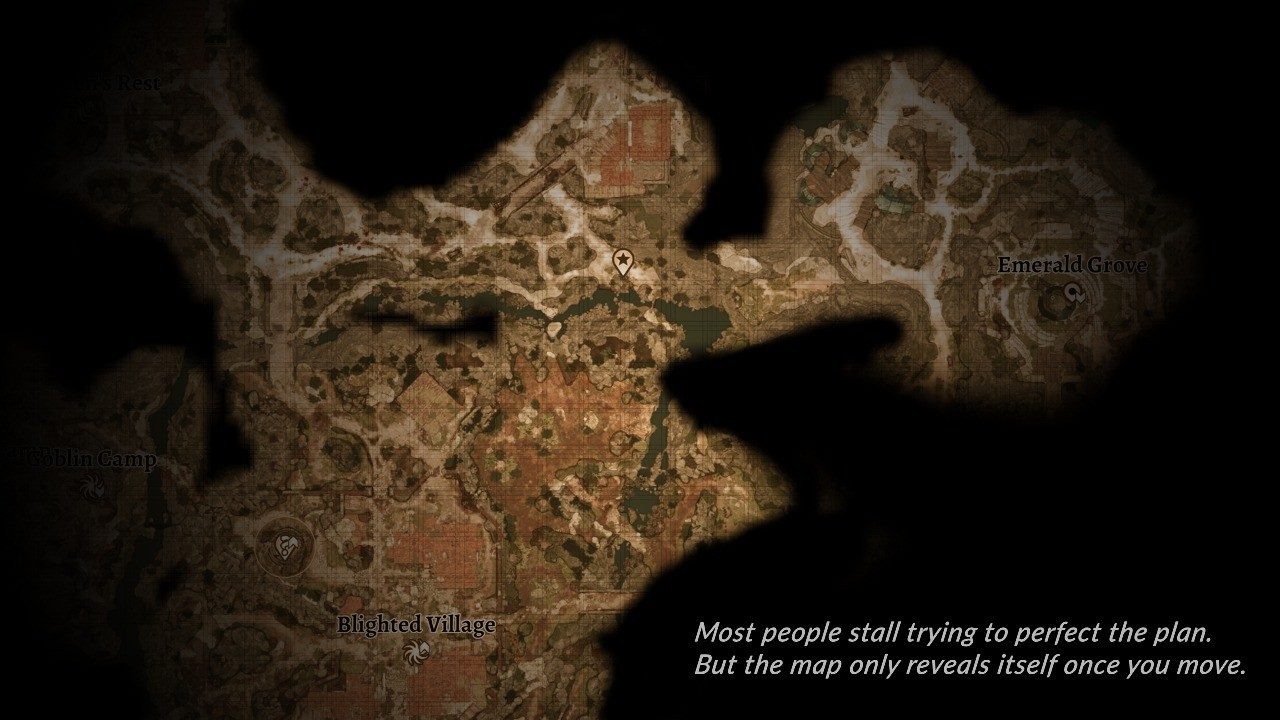
Before I ever started building a company, I was immersed in games that dropped you into chaos and said, figure it out. Worlds like the one in Baldur’s Gate 3 reveal themselves one step at a time, with no map, no guide, just the courage to keep moving.
You begin with almost nothing:
- A few tools
- A vague direction
- A willingness to experiment
You fail, rebuild, and try again until patterns start to emerge.
Eventually, what looked impossible becomes instinctive. You stop hesitating and start trusting your ability to navigate.
That’s what entrepreneurship feels like. You don’t start with clarity. You earn it by moving.
The Founder’s Loop
Most people wait until they feel ready. They over-plan and under-act.
But real builders live inside what I call the Founder’s Loop:
Take action → Learn → Adapt → Advance
You:
- Take action to create movement.
- Learn from what actually happens.
- Adapt based on what works and what doesn’t.
- Advance, carrying that experience into the next decision.
Each loop reveals a little more of the map. You start to see the terrain that was hidden before you began.
Frustration Is the Furnace
Progress doesn’t feel good while it’s happening.
I remember nights sitting in front of the screen, stuck on a puzzle that felt unsolvable.
- In real-time strategy games, I’d rebuild entire bases after losing everything in the final minute.
- In Portal, I’d spend hours creating portals across every surface, convinced there was no way forward, only to realize the answer was right in front of me, hidden by perspective.
That loop of failure, frustration, and discovery is where grit is built.
Business works the same way.
You hit walls, lose time, and question everything. But if you keep experimenting and looking for new angles, you start to see what was invisible at the beginning.
Frustration isn’t failure. It’s feedback.
Strategy Under Pressure
Few experiences mirror the reality of building a business like real-time strategy games such as Command & Conquer: Red Alert 2 or Age of Empires.
They teach you to manage limited resources under pressure:
- Deploy them too slowly, and you fall behind
- Deploy them too quickly, and you collapse before you can sustain growth
The real skill lies in balancing creation and expansion, making decisions in real time without seeing the full map.
That’s entrepreneurship:
- Building and defending simultaneously
- Adapting as new terrain comes into view
- Balancing caution and aggression to maintain momentum
The same timing that wins battles drives momentum in business.
Too cautious, you stall. Too aggressive, you burn out.
Progress depends on timing, awareness, and execution under pressure.
Exploration, Morality, and Building to Last
If real-time strategy games taught timing, The Legend of Zelda: Breath of the Wild taught creativity. It’s a world that rewards curiosity and experimentation.
There’s no perfect path, just the courage to test ideas until something works. That mindset is how new strategies emerge: not from certainty, but from curiosity and motion.
Star Wars: Knights of the Old Republic added another layer. It showed me that choices compound, and alignment matters.
You can move fast, but if you lose your code in the process, the story breaks. Leadership, business, and life all work the same way. Your direction is only as strong as your values.
And then there’s RollerCoaster Tycoon, which taught that creativity means nothing without structure. You can build something wild, but if it doesn’t serve people or sustain itself, it fails.
Success comes from balancing vision with discipline, fun with function, and chaos with control.
Each of these lessons still guides how I build today.
The Real Lesson
- You don’t need certainty. You need movement.
- You don’t need the whole map. You need to start exploring.
- You don’t need a perfect plan. You need to play.
Because the map doesn’t appear before you start. It reveals itself as you move forward.
And to be honest, I’m still uncovering mine. The map hasn’t completely revealed itself, and maybe it never will. That’s the point. The game doesn’t end.
You just keep playing.
This issue also ran on LinkedIn, where you can follow Signals & Systems.