Built to sit on your side of the table.
Most technology advice arrives from someone with something to sell. The Deady Group was founded on a single structural decision: keep the advice independent of the sale, and stay accountable for the result.
Organizations from $5M to $30M+ in revenue make consequential technology decisions without a dedicated function to make them well. Everyone else at the table brings an incentive of their own. What is missing is an advisor whose incentives are aligned with yours. That is the seat we built.
How we work.
Three commitments, in the order they happen.
- Diagnose before anything elseEvery engagement begins with a structured assessment: the Digital Presence & Technology Review, the POTS Readiness Assessment, or the evaluation suited to the situation. The problem is named, in plain language, before any solution is discussed. Sometimes the finding is that nothing needs to change.
- Recommend, in writing, before you decideWhat we found, what we recommend, and why, with the options that change nothing for us on the table beside it. Any relationship that bears on the recommendation is named before you decide. This is the Client-First Transparency Standard, and it is not a values statement; it is the operating procedure.
- Orchestrate the executionWe sit at the strategy layer and stay there. The work is carried out by specialists we have selected, contracted, and remain accountable for. You have one relationship and one accountable source, and the right people doing the work.
How delivery works.
The question behind every advisory engagement is "who actually does the work?" Here is the answer. The Deady Group does not deliver day-to-day work itself for organizations at this size. Delivery runs through two structured branches, each built and vetted for a specific kind of work, plus access to the wider ecosystem when neither is the right fit.
| Branch | What it carries | How it works |
|---|---|---|
| Growth and go-to-market | Positioning, demand generation, sales systems, marketing operations, revenue infrastructure | A dedicated go-to-market bench executes under our direction. We scope, direct, and stay accountable. |
| Technology advisory | Provider evaluation, sourcing, contract negotiation, implementation oversight, the day-to-day of a technology decision | A dedicated advisory bench carries the day-to-day. We own the diagnosis, the recommendation, and the outcome. |
| Multi-ecosystem access | Anything outside the two branches | Through relationships across several provider ecosystems, we can find and vet the right specialist for almost any need. When we cannot, we say so and refer you to someone who can. |
Founder-led is a design choice, not a capacity limit. Will built the partner capacity and the proprietary assessments so the firm can be incentivized to solve the actual problem rather than to sell a product, and so that a client of any size gets senior judgment on the diagnosis and specialist hands on the delivery.
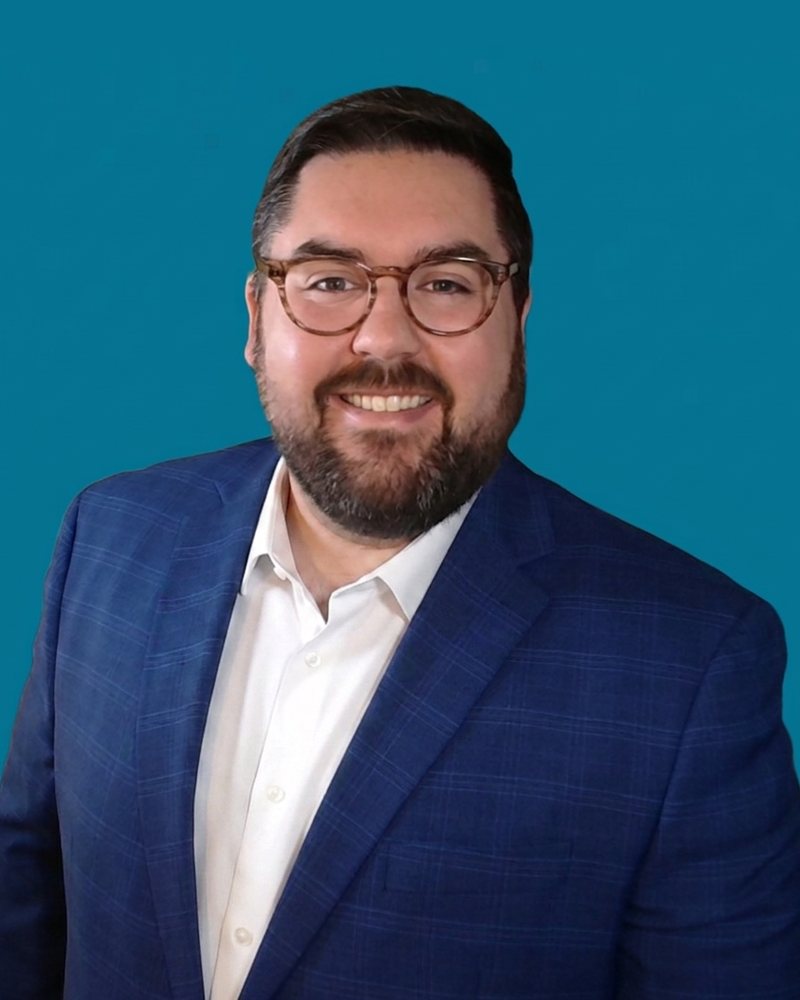
Will Deady
Will spent ten years in enterprise technology at S&P Global, S3 Partners, Everbridge, and Brainshark: selling it, advising on it, and building the operations behind it. He saw the same problem in almost every deal: the person recommending the technology was paid to sell it. He founded The Deady Group in 2025 to give companies an advisor whose incentives match their own.
He writes Signals & Systems, a newsletter on technology decisions for operators, and is the person a client calls when something on an engagement is not right.
The Client-First Transparency Standard.
Four commitments, each written down, each in force on every engagement.
Compensation disclosed.
How we are paid is stated in writing before work begins.
Material conflicts identified.
Any relationship that could influence a recommendation is named, not managed quietly.
A firewall between you and the vendor process.
We handle the outreach, the competing claims, and the sales pressure. You handle the decision.
The firm answers for the result.
Support during an engagement may come from our advisory bench or our growth bench. If there is a problem with either, it comes to the founder, and the firm resolves it.
What we lead.
Six areas, one advisor. In each one the decision is expensive to reverse, the options are sold by the people who benefit from your choice, and nobody inside the organization owns the question full time.
Cloud & Infrastructure
Network, cloud, and the infrastructure decisions that will not be revisited for five years. We size what you need, compare the providers who can deliver it, and keep the migration honest.
Cybersecurity & Resilience
Cyber insurance requirements, compliance reduced to the controls that matter, and recovery plans that hold up when something breaks.
Communications & Connectivity
Phone systems, contact center, Teams Phone, and the copper retirement that comes with a date attached. One conversation instead of five carriers.
AI & Automation
Governance before tools. Which AI use cases are real, what data they need, who owns the risk, and which vendor claims hold up once the pilot ends.
Spend & Vendor Management
Bills, contracts, renewals, and vendor choices, checked against what you actually use. No upfront fees, from a one-location business to a multi-site program.
Growth & Digital Presence
Positioning, pipeline, and a website that holds up when buyers, insurers, and search engines look before they call.
Who we work with.
Organizations from $5M to $30M+ in revenue making technology decisions that carry real consequence: a renewal, a platform change, a security requirement, a growth plateau, a leadership transition. The advice is the same in every industry. What changes is the cost of getting it wrong, and the rules the decision has to satisfy.
State and local government
Procurement rules, aging systems, and security requirements, with budgets that do not stretch.
Read moreHealthcare and life sciences
Continuity of care and research, patient data, and modernization that cannot interrupt either.
Read moreK-12 and higher education
Campus and district connectivity, student data, and decisions made against funding cycles.
Read moreFinance and insurance
Uptime, regulation, and vendors who all claim to be compliant.
Read moreInnovation-driven businesses
Growth that outruns the infrastructure it started on.
Read moreMSPs and technology providers
For MSPs we are a partner rather than a prospect: the Review opens doors, and our growth bench does the work it surfaces while you keep the technical seat.
For MSPsIn regulated and complexity-heavy environments, a technology decision has to survive an auditor, an insurer, a board, or a public procurement process. That is where a structured evaluation, a written rationale, and an advisor with no product to sell pay for themselves. The bench and ecosystems behind the work are on Partnerships, and if you are weighing a fractional CIO, here is the comparison, plainly.
Is The Deady Group a consulting firm or a broker?
Neither in the usual sense. We are an independent advisory that is sometimes compensated by the providers our clients select, and we disclose that in writing every time. A broker sells access; a consultancy sells hours. We sell judgment, and we tell you who is paying for it.
Who does the work?
Specialists from two structured benches, one for growth and go-to-market and one for technology advisory, under our direction and accountability. For needs outside those benches, we source the right specialist through the wider ecosystem or refer you elsewhere.
Do you work alongside our existing MSP?
Yes, and often. The MSP keeps the technical relationship and the operations. We bring the independent evaluation, the diagnosis, and the growth work the MSP does not do. Many MSPs are our partners.
What happens in the first conversation?
We ask about your environment, your goals, your constraints, and the decisions on your desk. The aim is to find where clarity is most needed and where the risk is highest, and to agree on a practical next step. It is usually short.
What do you need from us to assess our environment?
Whatever you have: bills, contracts, vendor lists, renewal dates, usage summaries, architecture overviews, and a note on any regulatory concerns. Gaps are fine. Finding them is part of the work.
Can you reduce our costs without switching providers?
Often, yes. Improving pricing, terms, and usage with your current provider is usually the first move, and a change of provider comes only if the review shows it is worth the disruption.
Will you ever recommend a delay, a smaller scope, or no purchase?
Yes. When the right answer is to wait, optimize what you have, or buy less, that is the recommendation, whatever it does to our compensation. It is written down so you can see it.
Do you provide implementation or managed services?
No. Implementation and ongoing managed services are carried out by the provider you select, or by specialists on our benches under our direction. We stay in the advisory role: alignment, governance, and decision quality.
When are you not the right fit?
If you only need implementation labor, have already chosen a vendor and want no advisory, or the decision is small and low-risk enough that a structured process adds more friction than value.
Where do you work?
We are based in Boston and advise organizations across Massachusetts and the United States. Most of the work is remote.
Begin with the diagnosis.
The Digital Presence & Technology Review is the fastest way to see how we work, and it costs nothing. If the situation is already clear, start a conversation instead.