Effective RPO and RTO definitions linked to business impact, vendor SLAs, and compliance ensure resilient disaster recovery. Regular testing and clear frameworks minimize downtime and audit risks.
RPO and RTO That Stand Up to Outages and Audits
Every article here starts from a decision an operator is actually facing. No product to sell, and how we are paid is on the page whenever a provider is involved.
Will writes it on LinkedIn. Latest issue: The Front Door Tells You More Than You Think. Read recent issues here, or get them by email.
Read the NewsletterEffective RPO and RTO definitions linked to business impact, vendor SLAs, and compliance ensure resilient disaster recovery. Regular testing and clear frameworks minimize downtime and audit risks.
BCP ensures critical operations continue during disruptions; DRP restores IT systems post-incident. Aligning both with RTO/RPO targets, vendor risks, and compliance strengthens resilience.
This template guides regulated teams in building clear, compliant business continuity plans with governance, risk assessment, recovery objectives, vendor risk management, testing, and alignment to standards like ISO 22301 and HIPAA.
Most technology cost reduction either finds nothing or trades a bill for an outage. The four places the money actually is, in the order that carries the least risk, and the one cut that is never worth it.
Twelve things to check before a telecom, cloud, or cybersecurity contract renews, in the order that saves the most money and risk. Most renewals are signed without any of them.
This template guides regulated industries in creating audit-ready disaster recovery plans aligned with NIST 800-34 and ISO 22301, covering RTO/RPO, compliance, communication, vendor SLAs, testing, and backup strategy.
This BCP template aligns with ISO 22301, NIST, SOC 2, HIPAA, and FFIEC standards, covering governance, BIA, crisis communication, vendor mapping, recovery objectives, and tabletop exercises for regulatory compliance and operational resilience.
This guide outlines key criteria for disaster recovery in regulated environments, emphasizing compliance (HIPAA, PCI DSS, FERPA), tailored RTO/RPO, cost-risk balance, DRaaS vs. hybrid options, data residency, SLAs, and continuous testing for resilient recovery.
How to evaluate technology vendors when compliance is not optional: define the requirement first, score every vendor on the same sheet, prove it before you sign, and read the exit before the price.
This guide offers a vendor-neutral framework for selecting cybersecurity consultants, emphasizing risk assessment, compliance (NIST CSF), incident response, third-party risk, and tailored security roadmaps to align with business goals.
Microsoft Teams Phone Standard offers essential calling features but requires careful evaluation of licensing, PSTN options, compliance (E911, STIR/SHAKEN), costs, and fit versus UCaaS to avoid surprises and ensure regulatory adherence.
The Deady Group guides Cisco UCS lifecycle decisions, refresh, extend, or pivot, by assessing cost, risk, performance, compliance, and hybrid cloud strategy for secure, scalable, and cost-effective infrastructure.
The Deady Group offers a vendor-neutral framework to help organizations evaluate Cisco Unified Communications Manager versus UCaaS, focusing on compliance, cost, reliability, and phased migration strategies for secure, scalable UC modernization.
The Deady Group guides regulated industries in selecting compliant, secure contact center software by balancing performance, cost, scalability, and vendor risk, ensuring informed, defensible decisions.
A practical sequence for evaluating technology vendors: what to do before the first call, how to control the demo, what to ask references, and how to compare on cost, risk, and long-term fit.
AWS Budgets enable regulated multi-account AWS environments to set cost limits, trigger alerts, enforce controls, and generate audit-ready evidence supporting HIPAA, PCI DSS, and SOC 2 compliance.
AWS Savings Plans help manage cloud costs with commitment-based discounts across services. Design strategies by analyzing workloads, setting targets, and enforcing governance for compliance and optimization.
AWS Trusted Advisor helps identify cost, security, and compliance issues, but must be prioritized by business impact and aligned with governance.
Azure Monitor deployment in regulated environments requires aligning data handling, residency, RBAC, and retention with standards like HIPAA and PCI DSS, while managing data collection, alert fatigue, and cost through KQL dashboards and clear workspace architecture.
The AWS Well-Architected Framework guides secure, compliant, cost-effective cloud design through five pillars. The Deady Group offers vendor-neutral reviews, risk mapping, and tailored action plans for confident, optimized cloud decisions.
AWS Cost Explorer enhances cloud cost transparency via tagging, budgets, anomaly alerts, rightsizing, and savings plans. It supports governance, cost optimization, and strategic cloud spend alignment.
Effective AWS cost modeling requires accounting for storage classes, data egress, encryption, and compliance costs. Regularly update assumptions, validate usage, and leverage independent expertise for accurate, risk-aware cloud cost optimization.
A framework for turning an Azure Pricing Calculator estimate into a defensible budget by scoping workloads, tagging assumptions, and accounting for hidden costs like egress fees and licensing.
The Deady Group offers independent, vendor-neutral advisory to simplify telecom, cloud, cybersecurity, and infrastructure decisions, covering compliance, risk management, cost optimization, and tailored strategy for business growth.
Cybersecurity compliance is a small set of controls, proven continuously, not a binder assembled before an audit. What the controls are, what proof looks like, and why an insurer, an auditor, and an attacker are all asking the same questions.
A five-step framework for technology decisions where compliance is a constraint, not a preference: diagnose, constrain, evaluate, decide, and document, with the compliance question answered first.
Choose UCaaS providers by evaluating compliance, security, reliability, compatibility, costs, and industry needs.
Cloud cost optimization in regulated environments requires clear cost visibility, strict control, and compliance adherence. Use tagging, reserved instances, audits, and careful vendor selection to balance spend, security, and regulations.
Cloud migration compliance requires more than a checklist. Learn how to manage risk, governance, and cost with a structured framework for regulated industries.
Learn how Cross-Functional IT Governance enables secure, compliant digital transformation by aligning stakeholders, controlling spend, and improving IT decision-making.
CRM issues are rarely tool problems. Learn how poor data architecture and misaligned CRM strategy break reporting, and why AI alone won't fix it.
Shadow AI is spreading through SaaS tools and embedded copilots faster than most organizations can govern it. Why AI governance strategy has to start with visibility, ownership, and readiness, not policy alone.
Learn why enterprise AI projects fail at scale and how an AI infrastructure strategy drives real results. A practical framework for AI readiness and execution.
IT modernization strategy often fails when new tools are added without replacing old ones. Learn how reducing complexity improves speed, cost, and execution.
IT risk management improves when risk is visible. Learn how high-performing teams reduce coordination, speed up decisions, and maintain control without slowing progress.
Fragmented IT visibility slows modernization and increases risk. Learn how improving visibility across your technology stack restores momentum and decision-making.
Email authentication is the foundation of deliverability and AI readiness. Learn how SPF, DKIM, and DMARC impact trust, security, and communication performance.
An effective IT resilience strategy helps organizations reduce risk, control cost, and manage AI, security, and operational complexity heading into 2026.
Telecom modernization is no longer optional. Learn how to replace legacy POTS systems, address compliance risks, and build a foundation for scalable digital transformation.
From Protection to Performance: how business resilience is changing the CIO's role, why AI cuts both ways, and what IT and risk leaders should decide next. Download the report.
What is UCaaS and why it matters. Explore how unified communications platforms are evolving into intelligent systems that drive productivity and insight.
What 501 U.S. enterprise technology decision makers said about digital transformation, the role of trusted advisors, and where UCaaS, CCaaS, IaaS, colocation, cloud apps, and security are growing. Download the report.
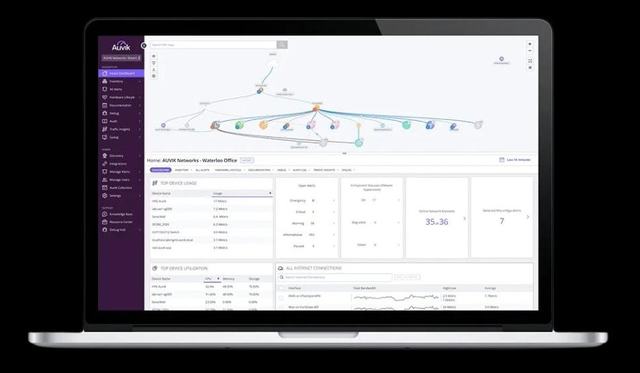
Discover how Auvik's cloud-based network monitoring delivers real-time visibility, simplifies IT management, and helps mid-sized businesses reduce downtime and improve performance.
Massachusetts' new cyber insurance law reshapes compliance. Learn what IT leaders in regulated industries must do to align security and mitigate risk.
How a nearly 30-year-old dental lab used a website rebuild, SEO foundations, and structured data to modernize its digital presence for regulated, service-based growth without losing the trust it built on referrals.
What Auvik does, who it suits, and how to try it. Includes our affiliate disclosure: we may be paid if you book through the link.
Security operations center readiness is about whether you would notice an attack and who would act. The questions to answer before you buy a SOC service or build a team.
Discover why regulated industries face challenges with SaaS procurement and learn solutions to streamline SaaS procurement for compliance and efficiency.
Checklists, reports, and guides for people making technology decisions in regulated industries: cyber insurance, copper retirement, vendor evaluation, resilience, and Zero Trust.
Discover how VDI prevents data leakage into AI systems, safeguarding local government data. Learn effective strategies to combat data leakage.
Explore Unified Communications Compliance in finance and insurance. Learn how secure UC solutions ensure compliance while enhancing communication.
A short summary for universities: why VPNs alone fall short, and how virtual desktops, multi-factor authentication, and data enclaves protect exams, coursework, and research in the age of AI.
Discover how universities can leverage VDI, MFA, and data enclaves to safeguard academic integrity in the digital age.
Zero Trust is a way of deciding who and what to trust, not a product. Why the human element is the weak point, and how to start without buying a platform first.