Most technology organizations are doing the right things on paper.
Cloud migrations are approved. AI pilots are greenlit. Roadmaps are full of modernization initiatives designed to move faster and compete better.
Yet execution slows.
Projects stall while teams work around brittle integrations. Engineers spend more time keeping systems alive than improving them. Every new initiative seems to require more coordination, more risk reviews, and more caveats.
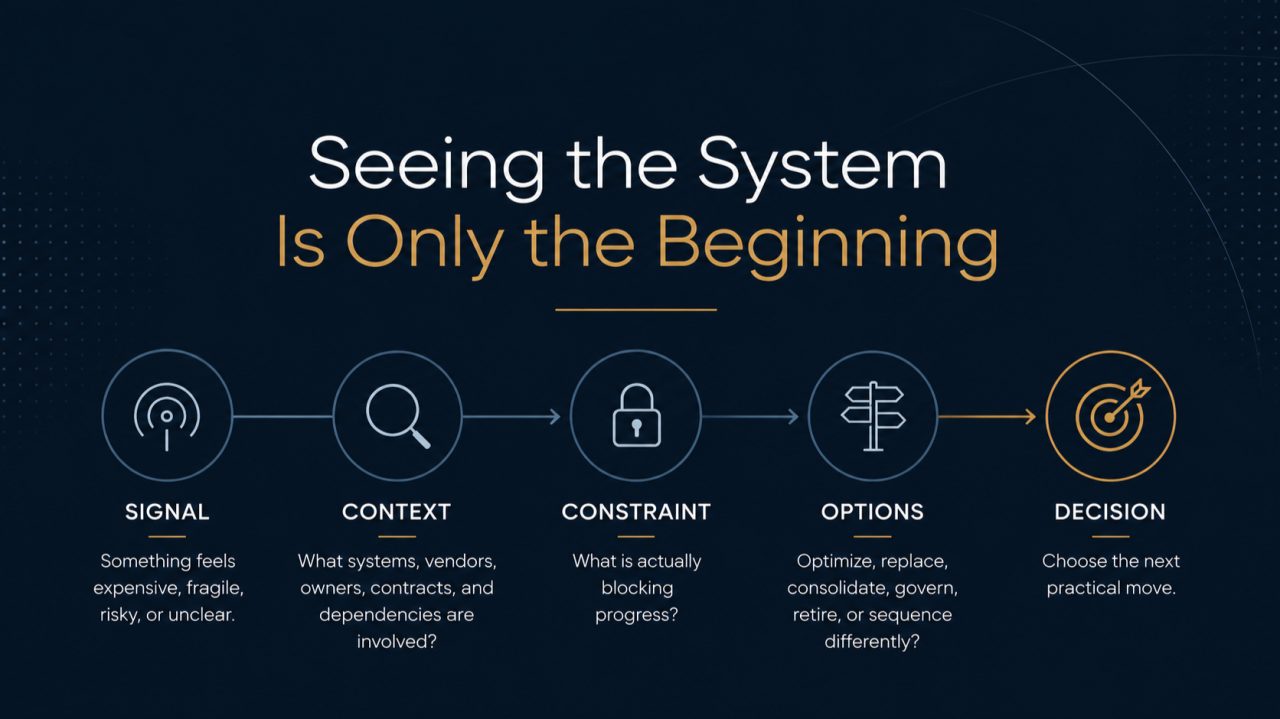
When that pattern appears, it isn't a delivery problem. It's a signal.
Modernization does not usually fail because of lack of vision or effort. It fails because organizations attempt to build the future on top of systems that are already consuming too much energy just to function.
Modernization does not start with new technology. It starts with understanding the cost of what already exists.
The Real Signal Leaders Miss
Technical debt has always existed. What has changed is its scale and its impact on leadership decisions.
IDC estimates that unmanaged technical debt consumes between 20 and 40 percent of development capacity. In practical terms, that means a significant portion of engineering effort is spent servicing past decisions instead of delivering new capability.
For many IT leaders, the effect is familiar:
- Initiatives that slip quietly rather than fail loudly
- Teams that default to caution because change feels risky
- Roadmaps that look ambitious but move incrementally
This isn't an engineering concern. It's an execution constraint.
When nearly half of technical effort is absorbed by maintenance, modernization becomes fragile by default.
What Technical Debt Actually Looks Like in Practice
Technical debt is often described as messy code or rushed shortcuts. That framing is incomplete.
In most organizations, debt shows up as:
- Platforms that resist integration and slow delivery
- Custom workflows no one fully understands anymore
- Databases that limit analytics, automation, or AI adoption
- Operational processes designed around systems that should have been retired years ago
Most of these choices were reasonable when they were made. They solved real problems under real constraints.
The risk appears when those decisions accumulate without clear ownership or governance.
In real organizations, technical debt functions like leverage. When it's intentional and visible, it can accelerate progress. When it is ignored, it compounds risk and cost until every change carries outsized consequence.
The moment technical debt limits strategic options, it stops being technical.
Why This Is Becoming Urgent Now
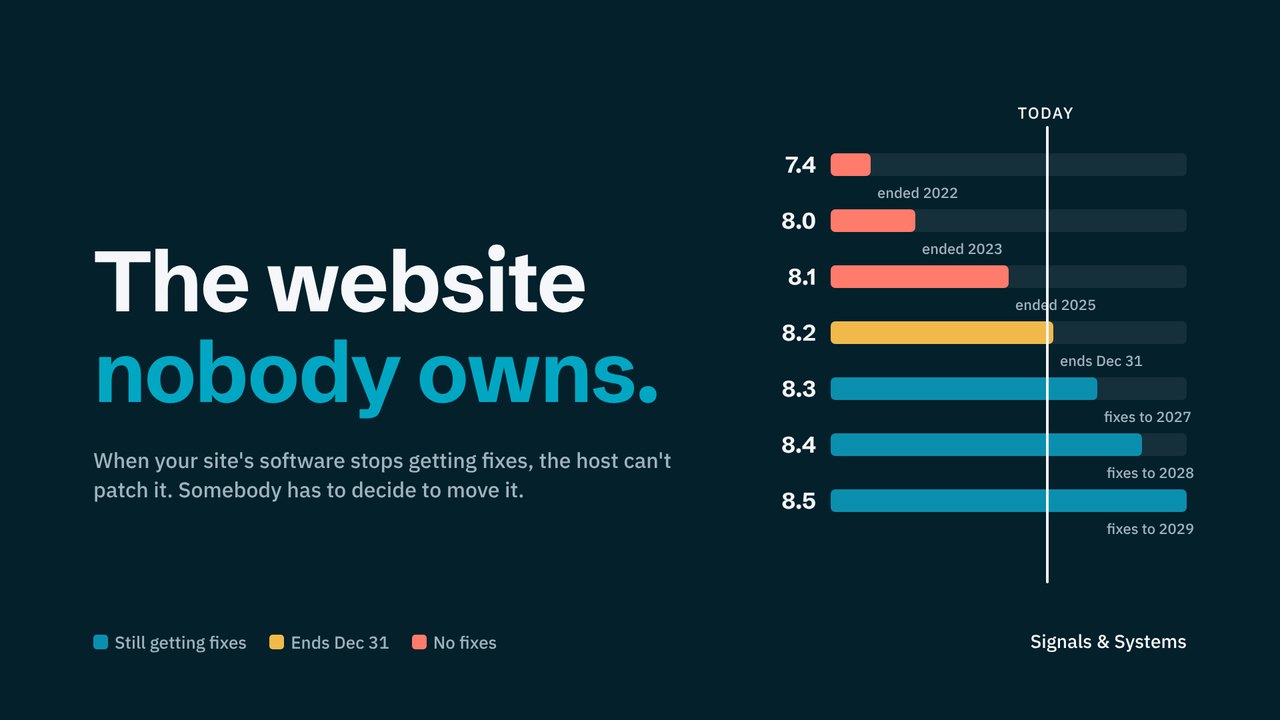
Legacy systems aren't new. What is new is the pace of change around them.
A growing majority of IT leaders now say legacy technology prevents their organization from fully adopting modern capabilities such as advanced analytics, automation, and AI. Not because leaders lack interest, but because the underlying systems cannot absorb change without increasing operational risk.
This is where many modernization efforts stall.
Organizations attempt to layer in new capabilities on top of foundations that were never designed to support them. As a result, complexity increases, delivery slows, and confidence erodes.
The system resists change even when the strategy is sound.
The Shift Most Modernization Efforts Miss
The dominant narrative says modernization begins with the next platform.
Cloud. AI. Microservices. The next tool.
That story is attractive, but incomplete.
Modernization succeeds when risk is reduced before complexity is added.
The more technical debt an organization carries, the more expensive and fragile every new initiative becomes. Innovation doesn't need to stop, but it does need to be sequenced.
Strong IT and operations leaders pause long enough to ask:
- Where does our environment resist change today?
- Which systems consume the most attention just to stay operational?
- Which assumptions are we carrying forward without reexamining them?
Those questions turn modernization from aspiration into execution.
Funding Progress Without New Budget Battles
One of the most common blockers to addressing technical debt is not technical at all. It's financial.
Modernization is often framed as a new investment request, meaning more budget, headcount, or tools.
That framing slows momentum.
What many organizations overlook is that they already have recoverable capacity tied up in unmanaged technology spend.
This is where Technology Expense Management (TEM) fits naturally into the modernization conversation.
At its core, TEM provides visibility and governance across telecom, SaaS, cloud services, contracts, and usage. When applied intentionally, it consistently surfaces unused licenses, overlapping platforms, billing errors, and spend that no longer reflects how the business actually operates.
In practice, well-run TEM programs often generate 10 to 15 percent savings in telecom and infrastructure categories. In SaaS environments, savings of 30 percent or more are not uncommon once ownership and usage are clarified.
Effective cost optimization isn't about cutting for the sake of cutting. It is about creating space to reinvest in work that actually moves the organization forward.
The strategic value isn't just the savings. It's what those savings enable.
Recovered spend can be redirected toward retiring brittle systems, simplifying integrations, and addressing the highest sources of operational drag without reopening budget negotiations. Just as importantly, TEM introduces discipline.
Spend becomes visible.
Ownership becomes clear.
Decisions move from assumption to evidence.
That governance is foundational to reducing technical debt sustainably.
A Practical Way to Think About Technical Debt
Addressing technical debt is not a cleanup project. It's portfolio management.
Start by identifying which systems impose the highest ongoing cost in time, risk, and attention. Measure impact operationally, not emotionally.
Then connect those systems to business outcomes. Delivery delays. Reliability incidents. Security exposure. Talent burnout.
From there, decisions become clearer with some debt getting refactored, retired, or tolerated intentionally.
When technical debt is treated as a strategic variable, modernization becomes more predictable and far less painful.
What Will Matter Most Going Forward
The next wave of transformation won't be won by organizations that buy the most tools.
It will be won by leaders who:
- Make hidden constraints visible
- Reduce friction before adding capability
- Fund change by reclaiming wasted capacity
- Govern systems intentionally rather than optimistically
Modernization does not start with the future.
It starts by understanding what your current systems are demanding today.
A Closing Thought
If you're navigating modernization pressure, technical debt, and budget constraints at the same time, that tension is not a failure signal. It is an information signal.
Sometimes a short conversation is enough to surface which part of the system actually needs attention next.
If this way of thinking reflects challenges you're navigating, I'm always open to a conversation. Start one here.
This issue also ran on LinkedIn, where you can follow Signals & Systems.