What should a Boston company do about the auto renewal clause in its tech contracts before year end? Find every auto renewal clause and its notice date, then decide line by line what to cancel, cut down or renegotiate before those dates pass. Most of the savings come from seats nobody uses, tools that overlap and price increases nobody pushed back on. The clause is what turns each of those into another full year.
December is when a lot of this lands. Budgets close, annual plans come up and vendor reps are working toward year-end numbers. However, the notice window on most renewals opened weeks ago, so the work starts with the calendar, not the invoice.
How an auto renewal clause works against you
An auto renewal clause extends the contract for another term unless you give notice by a set date. That date is usually 30, 60 or 90 days before the term ends, and the contract often says exactly how notice must be sent: in writing, to a named address, sometimes by certified mail. An email to your account rep may not count.
Massachusetts did add protections for automatic renewals. The Attorney General's rule at 940 CMR 38.00 requires clear disclosure, a simple way to cancel and advance notice before a renewal. But it's written for consumers buying for personal, family or household use. A company buying software or services for the business generally gets none of that, so the contract is all you have.
The line items worth checking now
These are the places where money usually sits in a company of 20 to 200 people. None of them needs a new vendor to fix.
- Seats for people who have left. Software licenses follow headcount up but rarely follow it down. Compare each seat list against your current staff list.
- Annual plans you can only shrink at renewal. Many annual SaaS plans, including annual-term Microsoft 365 subscriptions, let you add seats mid-term but only reduce them at renewal. Miss the date and you carry the extra seats for another year.
- Tools that do the same job. Two video platforms, two file-sharing tools, a project tool one team adopted and never dropped. Pick one before both renew.
- Premium tiers and add-ons. Upgrades bought for a single feature or a single project often outlive the need.
- Managed IT device counts. If you pay per device or per user, check that retired laptops and departed staff came off the count. We cover what that contract should say in managed IT services in Boston.
- Website, hosting and domain extras. Maintenance retainers with no recent work, privacy add-ons on domains you no longer use, and separate certificates your host already includes.
- Phone lines and circuits. Old lines kept for an alarm or fax, and internet circuits priced years ago. These rarely auto-correct, and the bill line names are hard to read.
The clauses to find before you call anyone
Before you ask for a better price, read the contract for these six clauses. They decide how much room you have.
| Clause | What it says | What to ask for |
|---|---|---|
| Renewal and notice | The term renews unless notice arrives by a set date, in a set way | A shorter notice window, notice by email, a reminder from the vendor |
| Price on renewal | Renewal at "then-current" pricing or with a yearly increase | A cap on increases, or the current price held for the next term |
| Minimum commitment | You pay for a floor of seats, devices or usage | A lower floor that matches today's headcount |
| Co-terming | Seats added mid-term extend the whole contract | Added seats that end on the original date |
| Termination | Fees for leaving early, or no exit at all | Termination for convenience after year one, or a fee that steps down |
| Exit and data | How you get your data back, and how fast | Export in a standard format, at no charge, within a set number of days |
If the clause you need isn't there, that's still worth knowing. It tells you what to add when you renegotiate, and what to avoid when you sign the next one.
A year-end order of work
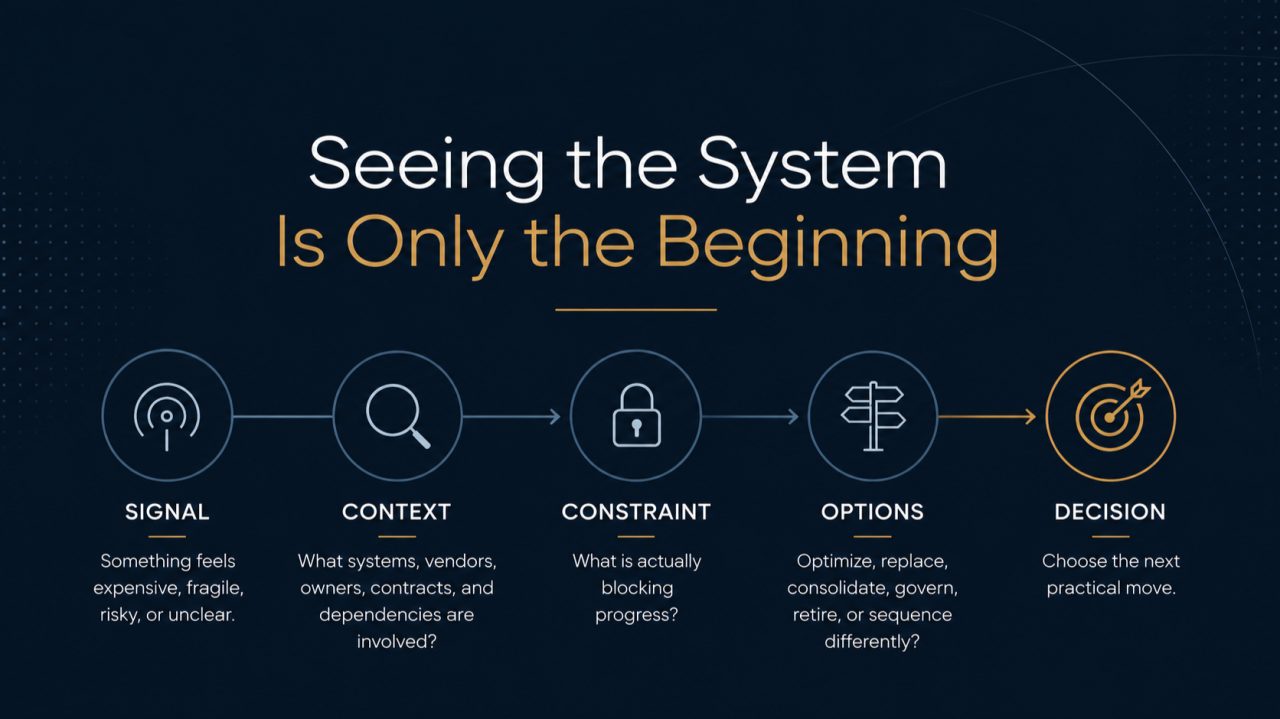
Do this in order. The first steps protect the deadlines you can still meet.
- List every recurring tech charge. Pull twelve months of card and invoice history, not just the contracts you know about. Small monthly charges add up and often have no contract on file.
- Find the renewal and notice dates. For each item, write down the term end, the notice window and the required notice method.
- Sort by notice date, then by cost. Anything with a notice date in the next 90 days goes first.
- Decide keep, cut, cut down or renegotiate. Ask the person who uses the tool, not only the person who pays for it.
- Send notice the way the contract says. If you want to renegotiate rather than leave, send notice of non-renewal anyway. It moves the conversation from a default renewal to a new agreement.
- Put the next date on a shared calendar. One owner, a reminder 30 days before each notice window, and a copy of the contract where others can find it.
For a fuller pre-renewal list covering telecom, cloud and security in depth, see before you renew: 12 contract checks.
What not to cut
Some lines look idle and aren't. Backups, security monitoring, domain renewals for the domain your email runs on, and the licenses behind multi-factor sign-in should stay unless something replaces them first. Furthermore, a cut that breaks email or recovery costs more than a year of the subscription. If you're unsure what a line item does, find out before you send notice.
Where to start
If you have one bill that looks too high, our bill analysis benchmarks it line by line before anyone talks about a provider. If you'd rather see the whole picture first, the free Digital Presence & Technology Review looks at what you carry today and where it overlaps. The Deady Group is an independent advisory in Boston, and we disclose how we're compensated before we recommend anything.
Questions, answered plainly
What is an auto renewal clause? It's the part of a contract that extends the agreement for another term unless one side gives notice by a set date. In technology contracts the notice window is often 30, 60 or 90 days before the term ends, and missing it usually means another full term at whatever price the contract allows.
Does the Massachusetts auto renewal rule protect my business? Generally not. The Attorney General's rule at 940 CMR 38.00, in effect since September 2, 2025, is written to protect consumers buying for personal, family or household use. A company buying software or services for the business has to rely on the contract itself.
Can we cancel after a contract has already auto-renewed? Sometimes. Read the termination section for termination for convenience, a grace period after renewal, or a right to exit if the price rose. If none exists, ask anyway, then calendar the next notice date so it doesn't happen twice.
Which tech contracts should we check first? Start with the ones whose notice date falls in the next 90 days, then the largest by annual cost. That order catches the deadlines you can still meet before it chases the biggest savings.